Deck Railing Installation in Stillwater, MN — Built to the 36-Inch Code Height
Deck railing installation in Stillwater, MN brings a deck up to the Minnesota State Building Code guard rules: a railing at least 36 inches tall on any deck surface more than 30 inches above grade, with openings no 4-inch sphere can pass. A railing that wobbles, sits low, or has wide baluster gaps fails inspection and puts anyone on the deck at risk. Installers mount the posts to the deck frame, not to the surface boards, so the rail holds under a push. Call (651) 372-0781 to reach a deck builder in Stillwater.
What Deck Railing Installation Covers
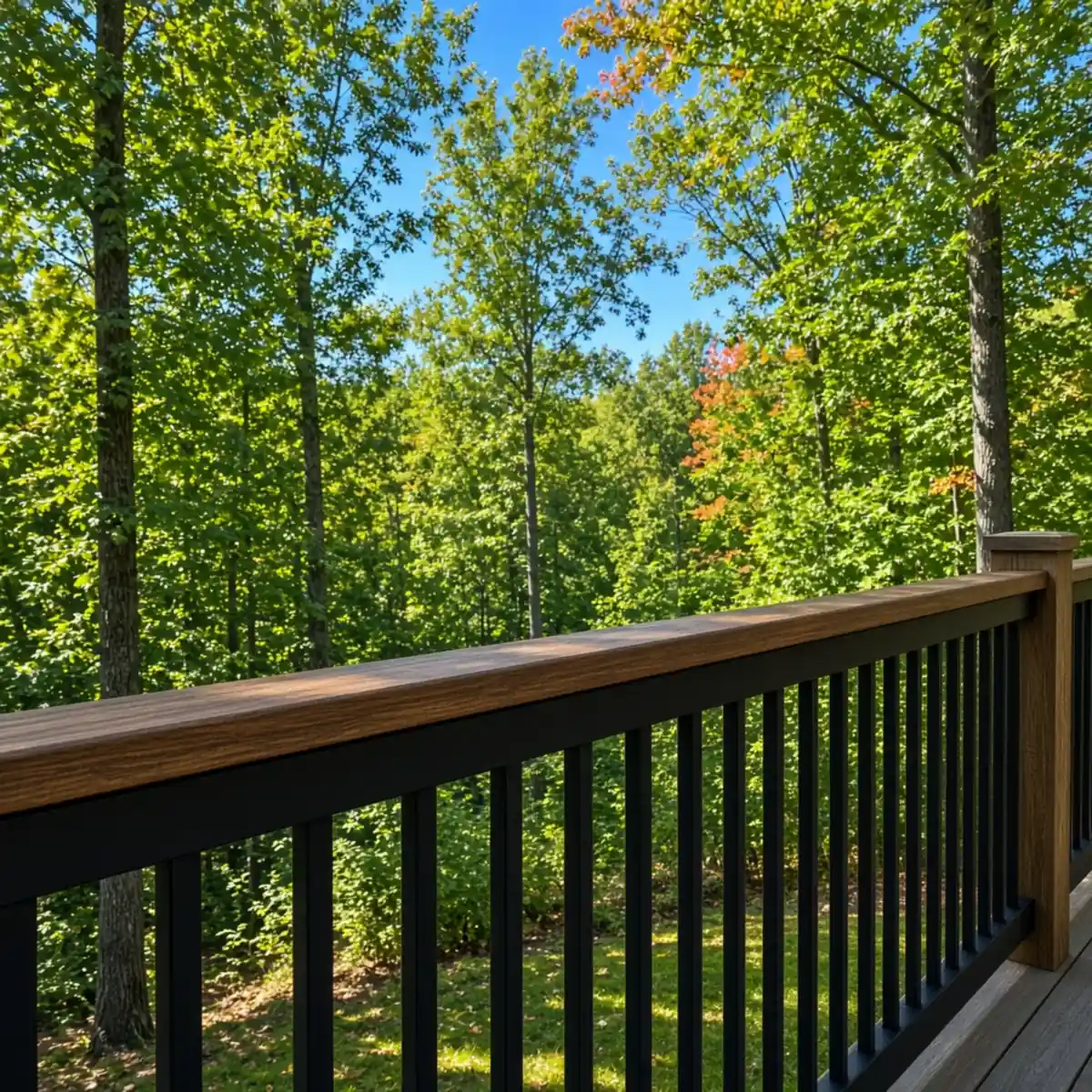
Deck railing installation covers the posts, the top and bottom rails, the balusters or infill, and the connections that tie it all to the deck frame. The railing is a life-safety system, not trim, so the whole assembly has to resist a horizontal load without giving. On a rebuild, the old railing comes off and the posts are re-anchored to the rim and the joists.
Material runs from pressure-treated wood to capped composite to metal balusters and cable infill. Each infill still has to meet the 4-inch opening rule, which for cable means tensioned runs that a sphere cannot spread past. Call (651) 372-0781.
How Deck Railing Gets Installed
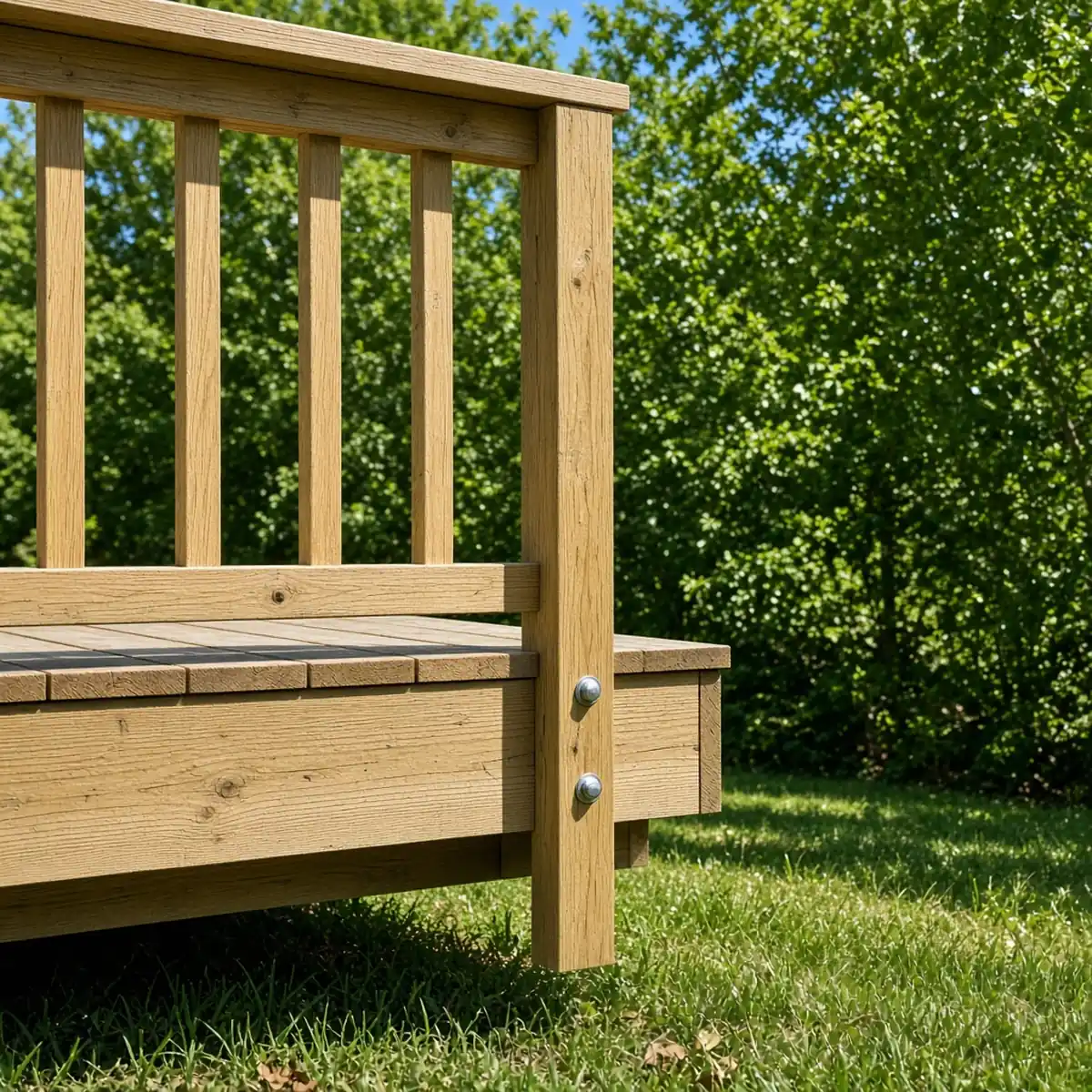
Deck railing gets installed from the frame out. First, the posts are bolted to the deck rim and the joists with through-bolts or rated hardware, not lag screws into the decking. Second, the top and bottom rails are set between the posts at the 36-inch height. Third, the balusters or cable infill go in spaced so a 4-inch sphere cannot pass, including the gap under the bottom rail. Finally, the inspector checks the height, the openings, and the load resistance at the posts.
That post connection is the step that decides whether a railing holds, which is why it is bolted to the frame and not the surface. Call (651) 372-0781.
Why Stillwater Decks Need Code-Height Railings
Stillwater decks need code-height railings because many older decks across Washington County were built before the 36-inch and 4-inch-sphere rules were enforced the way they are now. Many decks from the 1980s or 1990s have a 30-inch rail with balusters spaced wide enough for a child to pass, and freeze-thaw movement loosens the posts over the years. A railing that moves when pushed is the single most common deck violation an inspector finds.
A rebuilt or resurfaced deck triggers the current code, so the railing has to meet the 36-inch height and the opening rule even if the old one did not. A deck builder re-anchors the posts to the frame as part of that work. Call (651) 372-0781.
Work is performed by independent professionals.
What to Look for in a Railing Installer
A railing installer worth hiring treats the rail as a structural system. Look for an installer who:
- Bolts posts to the deck rim and joists, never lags them to the decking surface.
- Sets the top rail at a minimum of 36 inches above the deck surface.
- Spaces balusters or infill so a 4-inch sphere cannot pass, including under the bottom rail.
- Tensions cable infill so it resists spreading under load.
- Checks the railing resists a firm horizontal push before calling it done.
- Carries liability insurance and shows proof on request.
Those checks are what an inspector verifies, so they are what the installer should verify first. Call (651) 372-0781.
Frequently Asked Questions
A deck railing in Stillwater has to be at least 36 inches tall, measured from the deck surface to the top of the rail, on any deck more than 30 inches above grade, under the Minnesota State Building Code. The height is measured to the top rail, not the top of a cap or a baluster. Decks lower than 30 inches above grade do not require a guard, though many owners add one anyway. An installer sets the rail to the 36-inch minimum. Call (651) 372-0781.
Deck balusters have to be spaced so a 4-inch sphere cannot pass through any opening in the railing, which is the code test rather than a center-to-center measurement. In practice installers hold the clear gap to about 3.5 inches to leave a margin for wood movement. The same rule applies to the gap under the bottom rail, a spot inspectors check and builders miss. A railing that passes the sphere test anywhere passes the code. Call (651) 372-0781.
A loose deck railing can sometimes be re-anchored when the posts and the frame are sound and only the connection has worked loose. When the posts are rotted, the frame has heaved, or the rail sits below 36 inches with wide baluster gaps, the railing is replaced to meet code. An installer checks the post connections and the frame first to tell which job it is. A railing that moves under a push is not safe to leave. Call (651) 372-0781.
Replacing a deck railing as part of a deck rebuild or repair falls under the deck permit, which Stillwater's Building Department reviews and inspects. A like-for-like repair rule varies by project, so an installer confirms with the Building Department what the specific work needs. The railing height and opening are inspected either way. Building to the 36-inch and 4-inch-sphere standard is what passes.
Pressure-treated wood, capped composite, aluminum balusters, and tensioned cable all work in Minnesota weather, and each has to meet the 4-inch opening rule. Composite and aluminum shed the freeze-thaw moisture that splits and loosens wood balusters over time. Cable needs end posts strong enough to hold tension and intermediate posts to control sag. An installer matches the infill to the deck and the climate. Call (651) 372-0781.
Call Now for Deck Railing Installation in Stillwater, MN
Call (651) 372-0781 to reach a deck builder in Stillwater, MN for railing built to the 36-inch guard height and the 4-inch opening rule. See deck repair and restoration for a full deck check and composite decking for matching composite rail.