
How Deep Do Deck Footings Go in Minnesota?
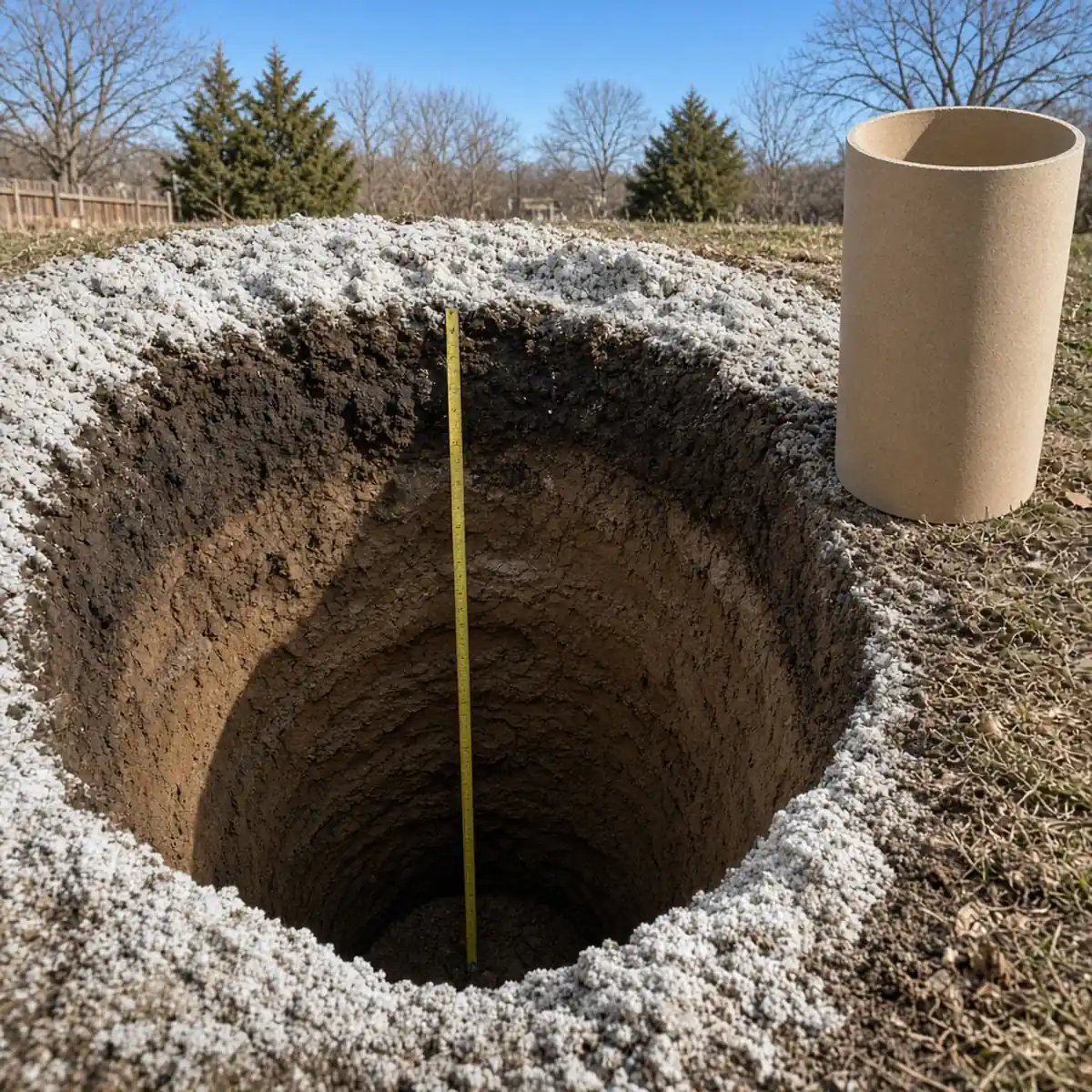
Deck footings in the Twin Cities metro, including Stillwater, go at least 42 inches below grade, below the frost line the Minnesota State Building Code sets. Farther north and in parts of central Minnesota the required depth rises to 60 inches. The depth exists for one reason: to put the base of the footing below the soil that freezes in winter, so frost cannot lift the deck. Here is how frost depth works and why it decides the number.
The Short Answer
In Stillwater and the rest of the Twin Cities metro, a deck footing reaches a minimum of 42 inches below grade. That depth is set under the Minnesota State Building Code frost-depth rules, which divide the state into zones: the southern and metro zone at 42 inches, and colder central and northern zones at 60 inches or more. The footing inspection confirms the depth before concrete goes in. A footing that stops above the frost line will heave. Call (651) 372-0781 to reach a deck builder in Stillwater.
Why Frost Heave Lifts a Shallow Footing
Frost heave lifts a shallow footing because water in the soil expands when it freezes. As winter cold drives down into the ground, the moisture in the top layers freezes and pushes everything above it upward. A footing with its base inside that freezing layer rides up with the frost, then settles unevenly when the ground thaws. Over a few winters the deck racks, the posts sit at different heights, and the ledger strains against the house.
Setting the base of the footing below the frost line keeps it in ground that does not freeze, so there is nothing to push it up. That is the whole point of the 42-inch depth. Call (651) 372-0781.
Why Minnesota's Depth Is Deeper Than Most States
Minnesota's frost depth is deeper than most states because the winters are longer and colder, so frost drives farther into the ground. A southern state sets footings at 12 inches or exempts them entirely; Minnesota's metro zone requires 42 inches, and the coldest zones 60. The roughly 51 inches of annual snowfall the Twin Cities metro averages under NOAA's 1991–2020 normals sits on top of ground that is already freezing deep.
That is why a deck plan from a milder climate does not transfer to Minnesota, and why the footing depth is the first number a Stillwater deck gets right. Call (651) 372-0781.
Frost Depth by Zone
| Region | Minimum footing depth |
|---|---|
| Southern and Twin Cities metro (incl. Stillwater) | 42 inches |
| Central Minnesota | 60 inches |
| Northern Minnesota | 60 inches or more |
Confirm the exact figure with the local building department, since the zone line and any local amendment decide the number for a given address.
How Footings Get Set to Depth
Footings get set to depth in a fixed sequence the inspection follows. First, the holes are augered or dug to at least 42 inches and widened at the base to the size the deck load needs. Second, the hole is inspected at depth before any concrete goes in. Third, concrete is poured and the post base or bracket is set. Finally, the posts are anchored to the brackets, not buried in the concrete, so they stay out of standing water.
Keeping the post out of the ground is why bracketed footings outlast posts set directly in soil. Call (651) 372-0781 to reach a deck builder in Stillwater.
Frequently Asked Questions
Deck footings in the Twin Cities, including Stillwater, need to reach at least 42 inches below grade, below the metro frost line set by the Minnesota State Building Code. The base of the footing has to sit in ground that does not freeze, so frost cannot lift it. The footing inspection confirms the depth before concrete is poured. A footing short of 42 inches will heave in winter, so the depth is a hard requirement. Call (651) 372-0781.
Footings that are not deep enough sit inside the layer of soil that freezes, so frost heave lifts them each winter and they settle unevenly in the thaw. The deck racks, the posts end up at different heights, the surface slopes, and the ledger strains against the house. The damage compounds over several winters until the deck needs rebuilding from the footings. Setting the base below the frost line is what prevents it. Call (651) 372-0781.
A freestanding deck more than 30 inches above grade, or one attached to a structure with frost footings, needs footings below the frost line in Minnesota. A low freestanding platform 30 inches or less above grade and not attached to a frost-footed structure can sometimes sit on surface blocks instead. The height and the attachment decide it. The local building department confirms what a specific platform needs. Call (651) 372-0781.
Minnesota allows a frost-protected shallow foundation as an engineered alternative, which uses insulation to hold ground heat and reduce the required depth. It takes an engineered design and is used more on heated structures than on open decks, where digging to 42 inches is the standard path. For most Stillwater decks, a footing augered below the frost line is simpler and is what inspectors expect. A deck builder sizes the footing to the plan. Call (651) 372-0781.
Deck posts are set on brackets above the concrete footing so the wood stays out of soil and standing water, which is what rots a buried post. The bracket holds the post base above grade on the poured footing, and water drains away instead of sitting against the end grain. A post set directly in concrete traps moisture and fails sooner. Bracketing the post is standard on a code-built Minnesota deck. Call (651) 372-0781.
Call Now for a Deck Builder in Stillwater, MN
If you are building or repairing a deck in Stillwater, call (651) 372-0781 to reach a builder who sets footings below the frost line and passes the footing inspection. See deck building in Stillwater for the full build.